Copyright 2020 - 2021 irantour.tours all right reserved
Designed by Behsazanhost
Iran Winter Travel Guide: From Ski Slopes to Sunny Beaches
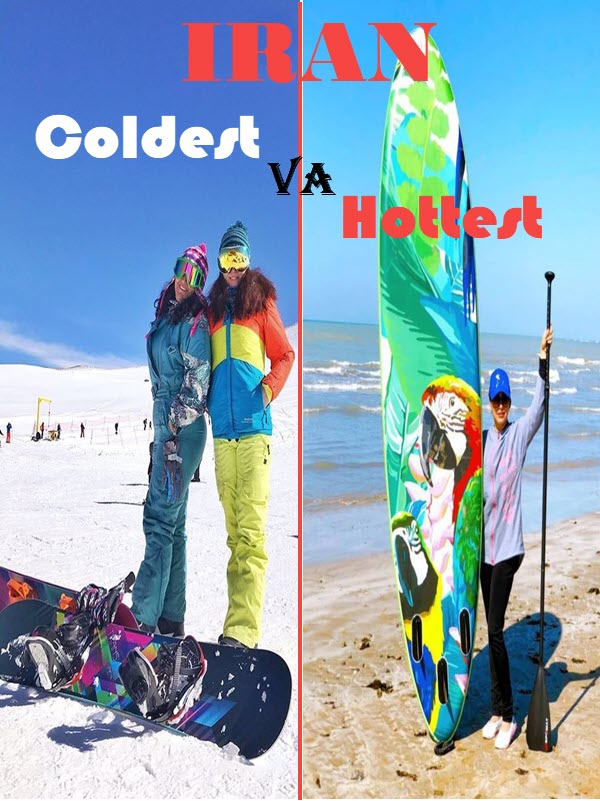
Experience Snowy Mountains and Warm Persian Gulf Beaches in the Same Winter Trip
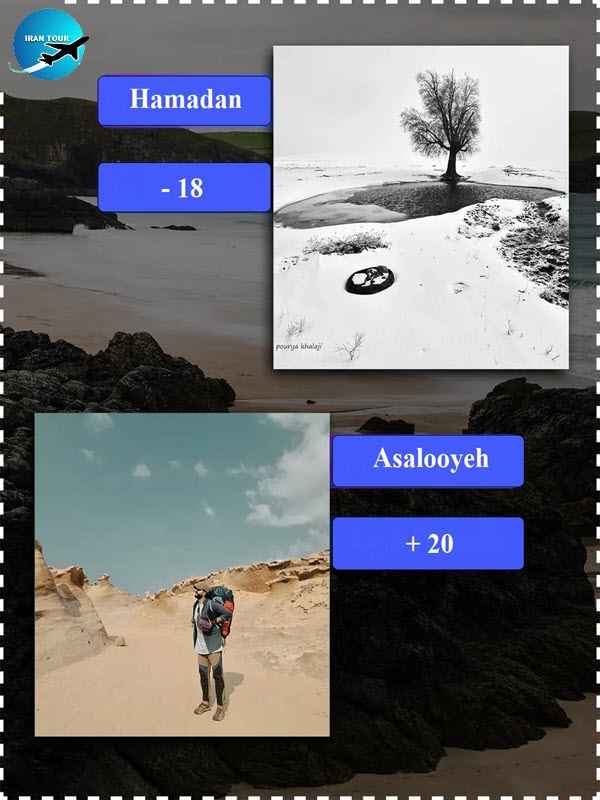
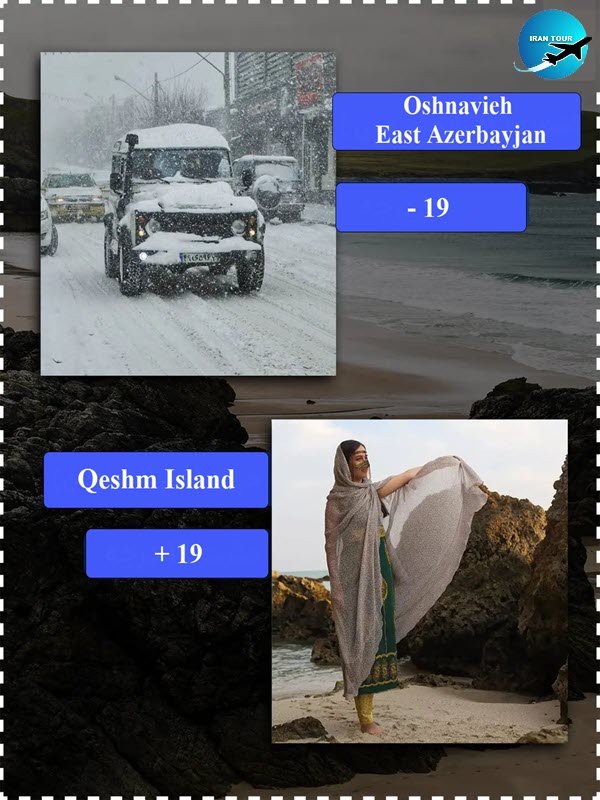
Iran Winter Travel Guide opens the door to a surprisingly diverse winter experience. During the same winter trip, you can ski on snowy mountains in northern and western Iran and enjoy warm beaches and water sports along the Persian Gulf in the south.
When winter arrives in Europe and North America, many travelers look for destinations where they can escape freezing temperatures, enjoy more daylight, and spend time outdoors. Iran offers all this in one destination, with three distinct winter experiences: snowy mountain landscapes in the north and west, cool and sunny weather for exploring historic cities, and warm desert and coastal destinations in the south.
While destinations such as Tabriz, Ardabil, and Saqqez offer authentic winter scenery and opportunities for snow activities, southern destinations including Kish Island, Qeshm Island, and Chabahar provide mild weather, beaches, and water-based adventures. Meanwhile, desert cities such as Yazd and Kerman offer cool, dry, and sunny days, making winter an ideal time to explore ancient architecture, cultural attractions, and desert landscapes without the extreme heat of summer.
H2 Quick Answer: Is Iran a Good Winter Travel Destination?
Yes. Iran is a strong winter travel destination because its regions offer completely different experiences during the same season: snow and skiing in the northwest and near Tehran, mild desert cities in the center, and warm Persian Gulf beaches in the south. Travelers can combine two or three of these climates in a single trip.
H3 Quick Facts
| Topic | Information |
|---|---|
| Best winter regions | Northwest (snow), Central desert (mild, dry), South (warm beaches) |
| Coldest winter destinations | Tabriz, Ardabil, Saqqez |
| Warmest winter destinations | Kish Island, Qeshm Island, Chabahar |
| Skiing near Tehran | Dizin, Shemshak, Tochal |
| Best months for southern Iran | November to March |
| Typical January temperature, Kish | Around 22°C by day, 15°C at night |
| Typical January temperature, Tabriz | Around 4°C by day, below freezing at night |
| Typical January temperature, Yazd | Around 13°C by day, near 0°C at night |
H2 Why Is Iran a Unique Winter Travel Destination?
H3 Is Iran Hot or Cold in Winter?
Iran can be both. Its large geographical area, mountain ranges, deserts, and long southern coastline create very different weather conditions during the same season. The Alborz and Zagros mountains bring cold and snow, the central plateau stays cool and dry, and the Persian Gulf and Gulf of Oman coasts remain mild.
Travel Experience Best Destinations
| Winter Experience | Recommended Destinations |
|---|---|
| Snowy landscapes | Tabriz, Ardabil, Saqqez |
| Skiing | Dizin, Shemshak, Tochal (near Tehran), Sabalan (Ardabil) |
| Mild, dry desert cities | Yazd, Kerman |
| Warm beaches | Kish Island |
| Island nature | Qeshm Island |
| Coastal exploration | Chabahar |
H3 Iran Weather in Winter: Snow, Desert Calm, and Warm Beaches
A traveler can move between three completely different worlds during the same trip.
H3 Western and Northwestern Iran: A Real Winter Experience
In Tabriz, Ardabil, and Saqqez, winter means snow-covered mountains, cold, clear air, and a traditional winter atmosphere well suited to photography and mountain activities.
H3 Central Iran: Mild, Dry Desert Cities
Yazd and Kerman sit in Iran's arid interior. Winter days are cool and comfortable rather than cold, with almost no rainfall, making this the easiest season to walk through their historic old towns.
H3 Southern Iran: A Warm Winter Escape
Kish Island, Qeshm Island, and Chabahar provide mild temperatures, Persian Gulf or Gulf of Oman landscapes, and outdoor activities — an alternative for travelers searching for warm places in January, winter sun destinations, or beach holidays in winter.
H2 Coldest Places in Iran for Winter Travel
Iran is often associated internationally with deserts and warm climates, but its mountainous regions reveal another side of the country.
H3 Tabriz: Snow, History and Persian Culture
Located in northwestern Iran near the Sahand Mountains, Tabriz combines snowy landscapes with Persian architecture, historical attractions, and traditional markets. January afternoons average around 4°C, with nights regularly falling below freezing and steady snowfall from December through February. Tabriz Historic Bazaar: The Tabriz Historic Bazaar Complex is a UNESCO World Heritage Site and one of the most important traditional markets in Iran. Its covered structure makes it a comfortable attraction during colder months, with traditional shops, Persian handicrafts, and local products to explore. Kandovan Village: Near Tabriz, Kandovan is known for its cone-shaped rock houses carved into volcanic formations, still inhabited today. Snowy landscapes give the village a distinctive winter atmosphere.
H3 Ardabil: Snowy Mountains, Skiing and Hot Springs
Located near Mount Sabalan, Ardabil is colder still — January averages around –2°C, with nighttime lows regularly reaching –7°C. The region combines snow-covered mountains, winter sports, and natural hot springs. One of the most memorable experiences here is visiting Sareyn's hot springs, where travelers can soak in warm mineral water surrounded by snowy peaks. Mount Sabalan: One of Iran's highest peaks, Sabalan draws travelers interested in snow-covered landscapes, mountain photography, and winter adventures.
H3 Skiing Near Tehran: Dizin, Shemshak and Tochal
For travelers who want to ski without leaving the Tehran area, Dizin, Shemshak, and Tochal are Iran's best- known resorts. Dizin, the largest ski area in the country, sits between roughly 2,650 and 3,600 meters and is reachable directly from Tehran's international airport by car. Shemshak, slightly closer to the capital, is popular for night skiing, while Tochal — connected to Tehran by one of the longest gondola lines in the world — is the easiest option for a half-day trip from the city. For lift tickets, gear rental, and route details, see our dedicated guide to skiing in Iran.
H3 Saqqez: One of the Coldest Cities in Iran
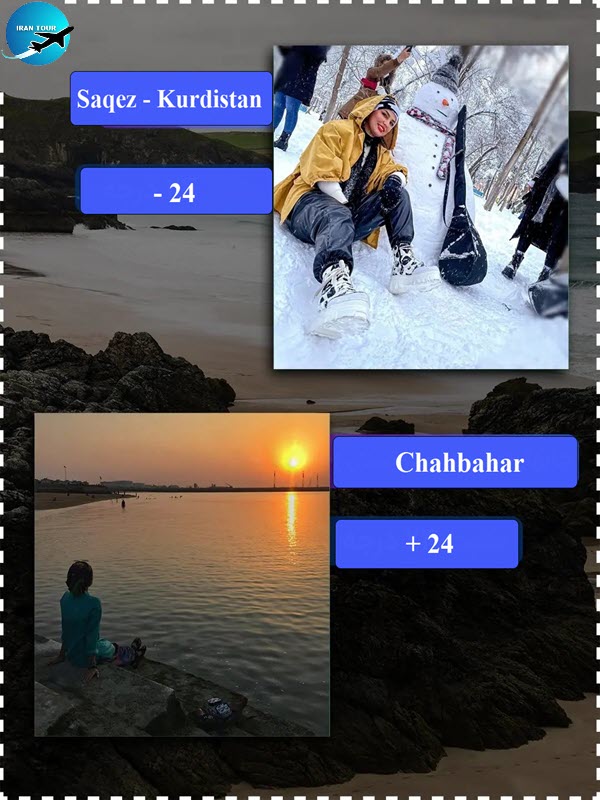
Located in Kurdistan Province, Saqqez experiences long winters because of its elevation and mountainous location. It offers a quieter, more authentic winter experience — snow-covered landscapes, Kurdish culture, traditional food, and rural winter photography, away from the more visited northwestern cities.
H2 Yazd and Kerman: Iran's Desert Cities in Winter
While northwestern Iran turns cold and the Persian Gulf coast stays warm, Iran's central desert cities offer a third winter experience. Yazd and Kerman sit in Iran's arid interior, where summer heat can exceed 40°C. Winter reverses this completely. In Yazd, January afternoons typically reach a comfortable 13°C, though nights can drop close to freezing. Kerman follows a similar pattern, with daytime highs around 10–12°C in December and January. Rainfall in both cities is close to zero year-round, so travelers can expect clear skies on almost every visit. This makes winter one of the best seasons to explore Yazd's mudbrick old town, wind towers, and Zoroastrian fire temple, or Kerman's bazaars and the nearby Kaluts desert formations. Walking through narrow historic alleys is far more comfortable at 13°C than at the 35°C-plus temperatures common from May to September.
H3 Who Should Choose Yazd and Kerman?
✓ Travelers who want desert architecture without the summer heat
✓ Photography lovers interested in mudbrick cities and desert light
✓ Visitors combining a north-south route — for example, Tabriz → Yazd → Kish
H2 Warm Winter Destinations in Iran: Escape the Cold
Weather For many travelers from Europe and North America, winter means short days, cold temperatures, and limited outdoor activities. Southern Iran offers a different picture through its Persian Gulf islands and coastal regions: Kish Island, Qeshm Island, and Chabahar.
H3 Kish Island: The Best Winter Beach Destination in Iran
Kish Island is one of the most accessible warm winter destinations in Iran. January is the coolest month of the year here, but it stays mild — afternoons average around 22°C and evenings settle closer to 15°C, considerably more comfortable than Kish's sweltering summer, when temperatures regularly pass 35°C.
H3 Why Visit Kish Island in Winter?
1. Comfortable Beach Weather: Beach walks, cycling around the island, coastal photography, sunset views, and outdoor relaxation are all far more pleasant in winter than during the hot summer months.
2. Water Activities and Marine Experiences: Boat tours, diving, and other marine activities are available year-round; winter's milder air makes them more comfortable to enjoy.
3. History Beyond the Beach: Kariz-e-Kish, an ancient underground water system, and the ruins of Harireh, once an important Persian Gulf trading center, add historical depth to a beach holiday.
H3 Who Should Choose Kish Island?
✓ Travelers looking for a warm winter beach holiday
✓ Families seeking an easy island destination
✓ Visitors who prefer comfortable, developed infrastructure
Kish may not be the best choice for travelers seeking remote nature and adventure — Qeshm and Chabahar offer more exploration-focused experiences.
H3 Qeshm Island: Nature and Adventure in Winter
Qeshm attracts visitors interested in geology, nature, and local culture rather than resort-style tourism. Stars Valley, shaped by wind and water erosion, is one of Iran's most striking geological landscapes, while the Hara Mangrove Forests offer boat tours through a unique coastal ecosystem. Winter's comfortable temperatures make long outdoor exploration much easier than in summer.
H3 Who Should Choose Qeshm Island?
✓ Nature lovers and photography enthusiasts
✓ Adventure travelers interested in geology and unique landscapes
✓ Visitors looking for authentic local experiences over resort comfort
H3 Chabahar: Iran's Warm Coastal Destination by the Gulf of Oman
Located in southeastern Iran, Chabahar combines ocean scenery, desert landscapes, and Baluchi culture. The Martian Mountains, shaped by millions of years of erosion, and Lipar Lagoon, known for birdwatching and photography, make Chabahar a destination for travelers who want more than a resort holiday. It is generally not the best choice for visitors seeking luxury resorts or a classic beach vacation.
H2 Can You Swim in Iran During Winter?
Yes — southern destinations such as Kish and Qeshm offer warm winter waters well suited to swimming, boating, and other coastal activities. Water temperatures in the Persian Gulf typically stay in the low-to-mid 20s°C even in January.
H3 A Note on Local Customs
Due to Iran's religious and cultural traditions, some beaches and public spaces are separated by gender, and modest dress is generally expected. This is worth knowing before you travel, though customs continue to evolve. Larger resorts often have hotel pools and private beach areas as an alternative.
H2 Snow to Sunshine: Best Winter Itineraries in Iran
A traveler does not have to choose between a snowy winter experience and a warm beach holiday — Iran allows both, and can add a desert city or a day of skiing in between.
H3 Itinerary 1: From Snowy Mountains to Persian Gulf Beaches
Tabriz → Tehran → Kish Island Best for first-time visitors, travelers wanting both winter and sunshine, and photography lovers. Tabriz introduces the colder, mountainous side of Iran; Tehran connects north and south; Kish closes the trip with beaches and water activities.
H3 Itinerary 2: Persian History and Southern Nature
Shiraz → Qeshm Island → Chabahar Best for nature lovers, cultural travelers, and adventure seekers, combining Persian gardens and historic architecture with island landscapes and Baluchi culture.
H3 Itinerary 3: Ski, Desert and Sea
Tehran (day trip to Dizin or Shemshak) → Yazd → Kish Island Best for travelers who want the widest possible range of winter experiences in one trip: a day on the slopes near Tehran, the calm desert architecture of Yazd, and a warm finish on the Persian Gulf.
H2 Iran vs Dubai, Maldives and Canary Islands for Winter
Holidays When travelers search for a winter sun destination, they often compare well-known options such as Dubai, the Maldives, and the Canary Islands. These destinations are popular for their sunshine and comfortable winter temperatures. Iran offers a different kind of trip: sunny beaches, snow-covered mountains, mild desert cities, and ancient history, all in one journey.
Destination Main Winter Experience Best For
Maldives Tropical beaches and luxury resorts Relaxation and luxury Dubai Modern attractions, shopping, entertainment City experiences Canary Islands European winter sunshine and beaches Easy access from Europe Egypt Warm coastal areas and ancient history Beaches and monuments Iran Snow, desert, beaches, and culture in one trip.
A unique, multi-climate experience
H2 Best Time to Visit Southern Iran in Winter
The best months to explore southern Iran are generally November to March, when temperatures are more comfortable, outdoor activities are easier, and coastal regions are far more pleasant than during the extreme summer heat.
H3 Southern Iran Month-by-Month
Month What to Expect
November Mild temperatures, fewer crowds — good for Kish, Qeshm, Chabahar December Sunshine and coastal comfort, a clear break from cold European winters January Coolest month in the south, still mild — around 22°C by day on Kish February–March Comfortable for nature exploration on Qeshm and around Chabahar.
H2 What to Pack for a Winter Trip to Iran
Packing depends on which parts of Iran you visit — a single itinerary can cross from near-freezing mountains to mild beaches.
H3 For Southern Iran
• Light jacket for evenings
• Comfortable walking shoes
• Sunglasses and sunscreen
• Modest swimwear for coastal activities
For Central Desert Cities (Yazd, Kerman)
• Layers — warm afternoons, cold nights
• A warm jacket for evenings
• Comfortable shoes for walking historic old towns
H3 For Northern and Western Iran
• Warm clothing and a winter jacket
• Gloves and thermal layers
• Comfortable winter boots
H2 Practical Tips for International Travelers Visiting Iran in
Winter Iran is a large country. Instead of trying to visit every region, choose destinations based on what you want:
Travel Style Recommended Destinations
Beach and relaxation Kish Island Nature and adventure Qeshm Island Unique coastal landscapes Chabahar Snow and skiing Tabriz, Ardabil, Dizin, Shemshak, Tochal Mild desert cities Yazd, Kerman Culture and history Shiraz, Isfahan, Tehran
H3 Planning the Practical Side of Your Trip
This guide focuses on where to go and when. For visa requirements, flight routes from Europe, and payment options, see our complete Travel to Iran guide, or our dedicated guide to getting an Iran visa as a European traveler.
H2 Why Winter May Be Better Than Summer for Southern
Iran Many travelers assume summer is the best time for coastal destinations. In southern Iran, the opposite is true — summer heat is extreme, while winter offers comfortable temperatures, easier walking and photography, and more enjoyable outdoor activities on Kish, Qeshm, and Chabahar.
H2 Frequently Asked Questions About Iran Winter Travel
H3 1.Is Iran warm in winter?
It depends on the region. Mountainous areas such as Tabriz and Ardabil see snow and temperatures near or below freezing, southern coastal destinations like Kish stay mild at around 20–22°C, and central desert cities such as Yazd sit in between, with cool nights and comfortable, sunny afternoons.
H3 2.What are the warmest places in Iran during winter?
Southern coastal areas are the warmest, led by Kish Island, Qeshm Island, and Chabahar.
H3 3.Can you swim in Iran during winter?
Yes. Southern destinations, especially Kish Island, offer suitable conditions for beach activities and marine experiences, with sea temperatures typically in the low-to-mid 20s°C.
H3 4.Are there ski resorts near Tehran?
Yes. Dizin, Shemshak, and Tochal are all within a few hours of Tehran and offer skiing from December through spring.
H3 5.Is winter a good time to visit Iran's desert cities?
Yes. Winter is one of the most comfortable seasons to explore Yazd and Kerman, since daytime temperatures stay mild and summer's extreme heat is completely absent. What is the best island to visit in Iran during winter?
If You Want Best Choice
Beaches and comfortable tourism Kish Island Nature and exploration Qeshm Island Unique landscapes and adventure Chabahar What is the coldest place in Iran? Mountainous regions such as Saqqez, Tabriz, and Ardabil are among Iran's coldest winter destinations, with regular snowfall and nighttime temperatures well below freezing.
H2 Final Thoughts: Discover a Different Winter in Iran
Iran offers a winter travel experience that few countries can match. In a single trip, you can walk through snowy mountain landscapes, ski a few hours from Tehran, explore mild desert cities, and relax on warm Persian Gulf
beaches. From the snowy peaks of Tabriz and Ardabil, through the quiet winter calm of Yazd, to the sunny shores of Kish, Qeshm, and Chabahar, Iran shows that winter can be a season of discovery. Snow, sunshine, desert calm, and coastal adventures — all in one country.
H2 Plan Your Winter Journey to Iran
From snowy mountains to warm Persian Gulf islands, Iran offers a unique travel experience in every season. Explore Iran's winter destinations and build an itinerary around what matters most to you. Meta Title Iran Winter Travel Guide: Snow, Beaches & Desert Cities Length: 55 characters Meta Description Discover Iran in winter: snowy mountains and skiing near Tehran, mild desert cities like Yazd, and warm Persian Gulf beaches from Kish to Qeshm.
 |
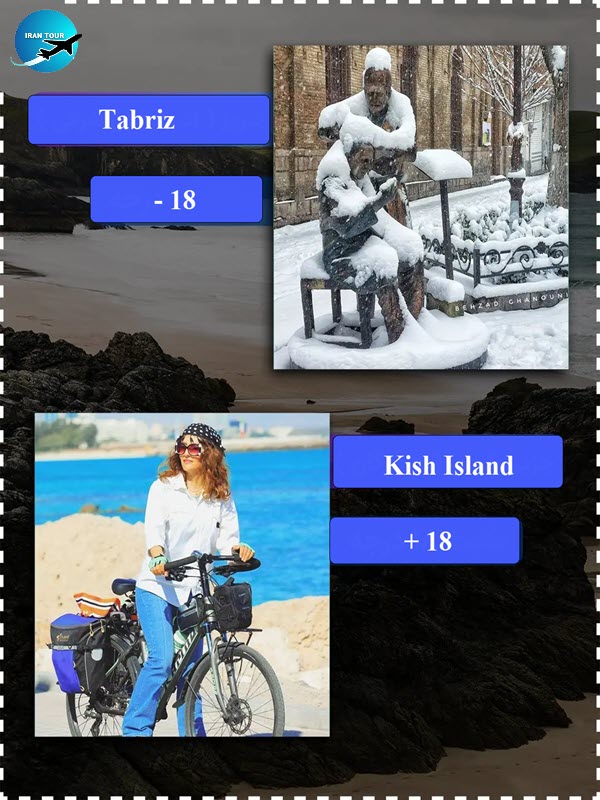 |
Tabriz city - West Azerbaijan & Kish Island
 |
 |
 |
 |
- Details
- Category: Where to go in IRAN