Copyright 2020 - 2021 irantour.tours all right reserved
Designed by Behsazanhost
Tehran's Metro Guide
While Tehran is a vibrant metropolis, its surface-level traffic is famously heavy. For travelers looking to maximize their sightseeing time, the Tehran Metro is the absolute best way to navigate the city. Metro not only can save your travel time, but also can be part of the cultural experience as it includes a variety of people who live and work in the city. Far beyond just a transit system, the Tehran Metro is a cultural experience in itself. It is clean, incredibly safe, and highly efficient. Traveling underground offers a unique window into local life, where you will encounter friendly, hospitable locals who are often eager to practice their English, help you find your way, or simply welcome you to Iran. Here is everything you need to know to navigate Tehran’s underground like a local:
Navigating the Network
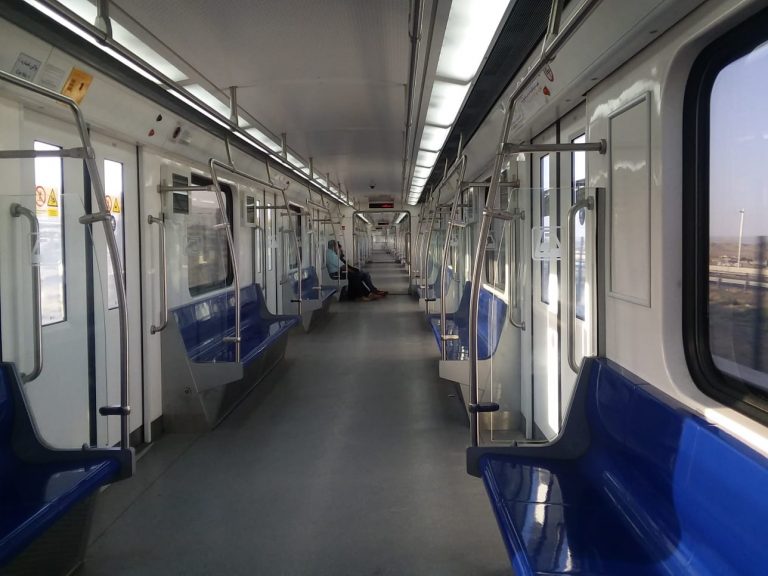
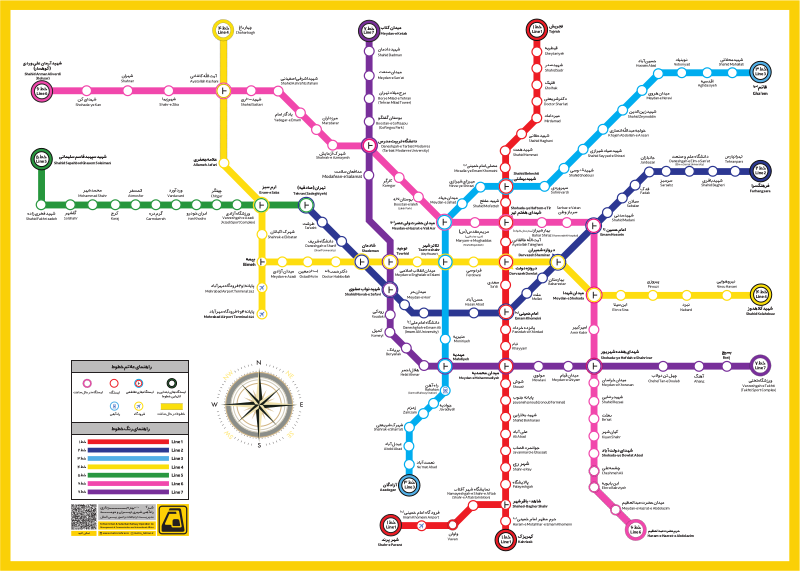
The Tehran Metro features a comprehensive network of interconnected lines, color-coded and numbered for easy navigation. You do not need to speak Persian to get around! All stations, directional signs, and system maps are bilingual (Persian and English). Above the doors inside the train cabins, you will find dynamic maps indicating the next stops, and automated voice announcements are also made in both languages.
Before you head out, download the Tehran Metro App (available on Android and IOS) or save a PDF map of the metro to your phone. If you ever look lost, don't worry, Iranians are famous for their hospitality and someone will undoubtedly stop to help you.
Tickets and Fares
The Tehran Metro is incredibly affordable, with fares typically costing the equivalent of just a few international cents. You have two main options for ticketing, both available at the ticket booths inside every station:
- Single-Journey Paper Tickets: Ideal if you only plan to use the metro once or twice.
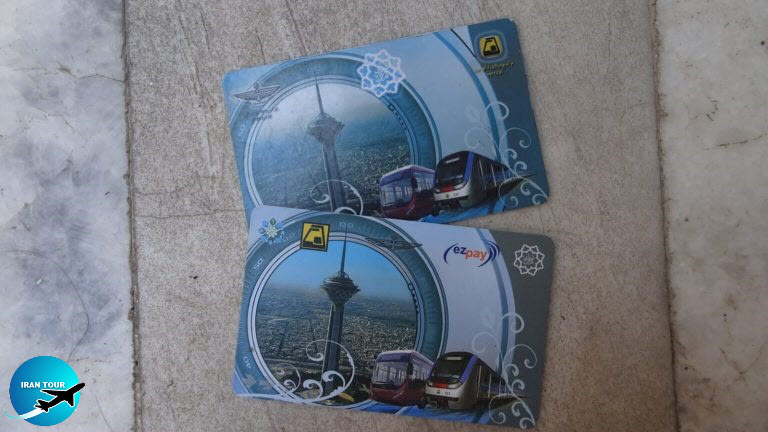
- Metro Electronic Card (EzPay): Highly recommended for tourists. This is a reloadable, contactless smart card. It saves you from standing in ticket lines and can also be used on the city's BRT (Bus Rapid Transit) network. You simply tap the card on the turnstile scanner when entering and exiting the station.
Note: Due to currency fluctuations, Rial prices change, but a standard inner-city journey usually costs around 30,000 to 50,000 Rials. You can recharge your electronic card with cash at the station ticket windows.
Operating Hours and Frequency
The metro runs smoothly throughout the week, but keep in mind that the Iranian weekend falls on Thursday and Friday.
- Weekdays (Saturday to Wednesday): Operating from roughly 05:30 AM to 22:30 PM. Trains arrive at intervals of 2 to 5 minutes.
- Weekends & Holidays (Thursday to Friday): Operating from roughly 06:00 AM to 22:15 PM. Trains arrive at intervals of 5 to 10 minutes.
Beware of the Rush Hour: Like any major global city, Tehran's metro becomes heavily congested during commuter rush hours, specifically between 07:00 - 09:00 AM and 17:00 - 19:00 PM. If you are claustrophobic or traveling with large bags, it is highly advisable to plan your metro trips outside of these windows.
Key Tourist Stations by Line
Line 1 (Red Line) - The North-South Artery:
Tajrish: The northernmost stop. Closest to the beautiful Tajrish Bazaar, Imamzadeh Saleh Shrine, Darband (mountain cafes), and the Sa'adabad and Niavaran Palace Complexes.
Taleghani: Closest station to the Artists' Park (Bagh-e Honarmandan) and the Former US Embassy.
Imam Khomeini: The historic heart of the city. Closest to the National Museum of Iran, the Treasury of National Jewels, the Post Museum, and the Glassware Museum.
Panzdah-e Khordad: Step out directly into the bustling Tehran Grand Bazaar and the lavish Golestan Palace (UNESCO World Heritage Site).
Terminal-e Jonoob: Direct access to Tehran’s Southern Bus Terminal (for buses heading to Kashan, Isfahan, and Shiraz).
Line 3 (Light Blue Line):
Theater-e Shahr (City Theater): Drops you at Valiasr Junction. It is surrounded by Daneshjoo Park, the main City Theater, and a neighborhood packed with fantastic cafes and restaurants.
Rah-Ahan: Direct access to Tehran’s main Railway Station.
Line 4 (Yellow Line) - The East-West Artery:
Ferdowsi: The hub for official currency exchange offices and close to many embassies.
Meydan-e Azadi: Closest station to the iconic Azadi Tower and the West Bus Terminal.
Airport Connections
1. Imam Khomeini International Airport (IKA) - Red Line Branch
To get to the international airport, take Line 1 (Red) south to Shahed - Bagher Shahr station, then transfer to the IKA branch line.
Important: Trains to IKA currently operate with lower frequency (roughly one train every 80 minutes) between 06:10 AM and 20:10 PM.
The ticket price for the airport branch is slightly higher than standard city fares (historically around 90,000 to 150,000 Rials). The station is located directly opposite Terminal A.
2. Mehrabad Domestic Airport - Yellow Line Branch
If you are catching a domestic flight to cities like Shiraz, Isfahan, or Mashhad, take Line 4 (Yellow) to Bimeh station, and transfer to the short Mehrabad branch line.
Alight at Mehrabad Terminals 1 & 2 (for Zagros, Kish Air, Iran Air, etc.).
Alight at Mehrabad Terminals 3 & 4 (for Mahan Air, Aseman, etc.)
- Details
- Category: Tehran Tourism